
Garn Fechan – Ancient Iron Age Hillfort · 2,500 years on this hill
Welcome to Garn Fechan, a historic Iron Age hillfort dating back over 2,500 years.
This hill was already an old fort when the Romans landed in Britain. By the time Caesar's first legion stepped onto an English beach in 55 BC, people had been living on Garn Fechan for the better part of five hundred years.
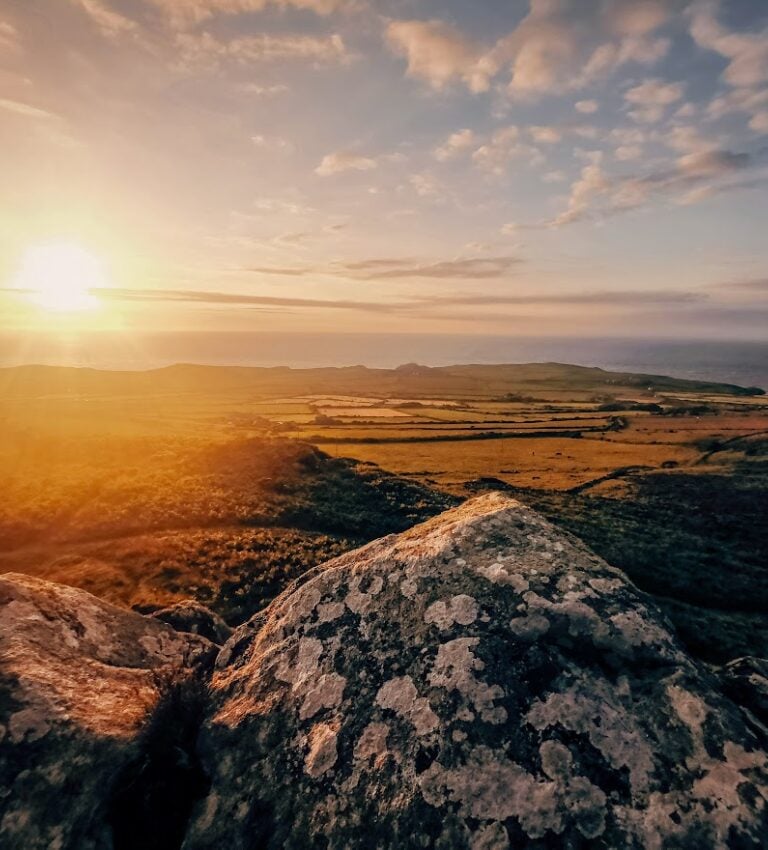
The fort sits on a rocky outcrop above the campsite. From the top you can see Strumble Head lighthouse, the Irish Sea, and on a clear day the coastline of Ireland itself. To the west, 280 metres across a flat saddle of ground, sits its bigger sibling — Garn Fawr. The two forts are intervisible. People standing on one could watch what was happening on the other.
Why here
The rock you're walking on is older than almost anything else around it. It's a volcanic intrusion — molten rock that pushed up from underground around 440 million years ago, never broke through to the surface, and cooled into something harder than the land around it. Everything softer eroded. This rock stayed.
That's why there's a fort here. The hill picked itself.
Garn fechan means small rock. Garn fawr next door means big rock. The Welsh names are descriptions, not titles. The Iron Age people who lived here probably called these places something similar in their own language.
The people who built it
This was the territory of the Demetae. They were the Celtic tribe of West Wales, and they're worth knowing about for one reason: they're the only Welsh tribe whose name survived. Dyfed — the mediaeval kingdom, the modern county, the dialect of Welsh still spoken in Pembrokeshire ; all of it traces back to the Demetae. The word in your mouth when you say "Dyfed" is two thousand years old.
What's still here
The fort enclosed an area roughly 60 metres by 50, about half the size of a football pitch. The northern and western sides didn't need much building: the natural rock face was already a wall. The south-eastern side is where the work went in. There's a rampart of stacked stone with a central entrance gap, facing the gentler approach. The eastern rampart survives best.
Look for this: the entrance gap in the south-eastern rampart. It's the deliberate weak point; the only place the builders chose to leave a way in. Stand in it. Look at the inner face and you can still see the big stones lining the wall, exactly where someone placed them roughly 2,500 years ago.
If you only do one thing: walk up at sunset. The fort faces west across the Irish Sea. The Iron Age people who lived here saw the same sun set into the same sea. They stood where you're standing. The view hasn't changed.
Please help protect this special place by respecting the land, wildlife, and archaeology during your stay. Don't move stones; don't dig; don't light fires on the ramparts. The walls have lasted 2,500 years partly because people who came before you also left them alone.
Thank you for visiting Garn Fechan and staying at Hillfort Camping.
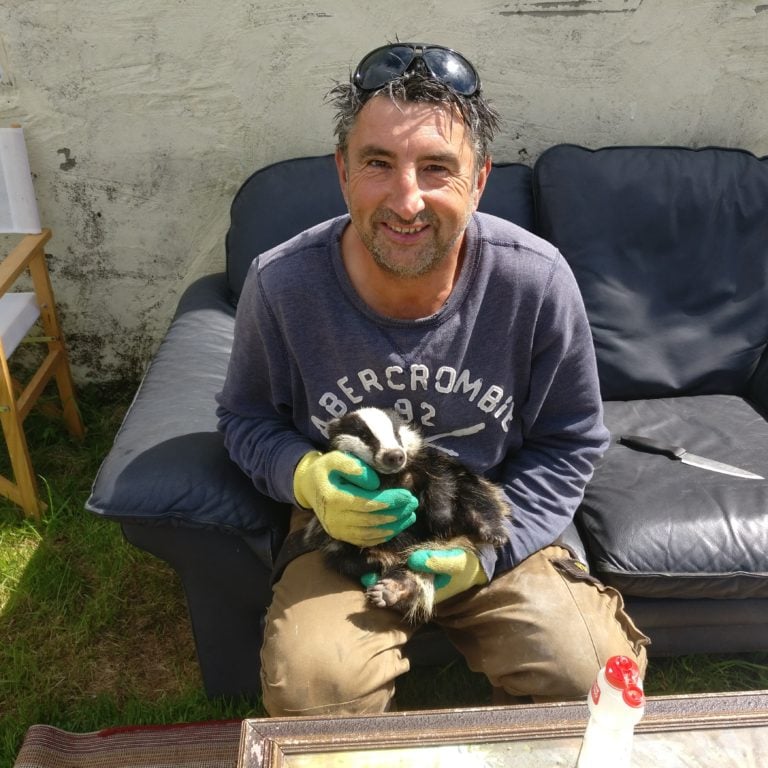
John, the Campsite Owner



Heritage
Echoes of Celtic life at the hillfort campsite


Quick FAQs
What is Hillfort Camping?
It’s camping near ancient Celtic hillforts, blending history with nature.
When to visit?
Are guided tours available?
What should I bring camping?
Is it family-friendly?
Spring and autumn offer mild weather and fewer crowds.
Yes, local experts lead tours sharing Celtic stories and archaeological insights.
Bring sturdy boots, weatherproof gear, and a good flashlight for night walks.
Absolutely, kids love exploring the ancient earthworks and open spaces.
Contact
Office: 01348891648
Mobile: 07723030513
© 2025. All rights reserved.